
The numbers from 2025 are in, and they rewrite the narrative about where the global ATV and UTV market is heading. South America’s off-road vehicle market grew 37 percent year-over-year, outpacing every other region including the historically dominant North American and European markets. Brazil alone added over eighty thousand new unit registrations. Chile’s mining sector drove a 52 percent increase in UTV fleet purchases. Argentina’s agricultural ATV segment expanded by 28 percent. While most powersports manufacturers were still optimizing their North American dealer networks, SWM was quietly building a distribution presence across seven South American countries that is now generating returns most industry observers failed to anticipate.
The strategic logic behind SWM’s Latin American push is worth examining in detail, because it represents a case study in market timing, product-market fit, and the compounding advantage of early mover positioning in an underappreciated growth region. The off road side by side lineup, spanning from the 580cc utility platform to the 999cc performance flagship, maps almost perfectly onto the region’s three primary demand segments: agricultural utility, mining and industrial fleet operations, and recreational trail riding.
The Brazil Bet: Volume and Local Assembly
Brazil is the anchor market, and SWM’s approach there reveals a level of commitment that distinguishes strategic investment from opportunistic distribution. Rather than shipping fully assembled units from Asia and accepting the punishing import tariffs that can add forty to sixty percent to landed costs, SWM established a CKD (Completely Knocked Down) assembly partnership with a local manufacturer in Sao Paulo state. The arrangement allows SWM to import major subassemblies — engine, transmission, chassis components — at significantly reduced tariff rates while assembling the final product in-country with locally sourced components including tires, batteries, and body panels.
The economics are transformative. A fully imported Trailhunter 1000 would retail at a price point roughly 55 percent above its North American MSRP after tariffs and logistics. The CKD-assembled version reaches Brazilian dealerships at a premium of approximately 22 percent — still higher than North American pricing, but competitive within the local market where all imported powersports equipment carries a tariff burden. The cost advantage compounds across the product line: the Nomader 580, SWM’s highest-volume model in Brazil, retails at a price that undercuts the nearest comparable Japanese competitor by approximately 18 percent.
Chile: Mining as a Gateway
Chile represents a different strategic play entirely. The country’s copper mining industry operates some of the world’s largest and most demanding off-road vehicle fleets, with individual mine sites maintaining hundreds of UTVs for personnel transport, equipment inspection, and emergency response. The operating conditions are brutal — high altitude, extreme dust, temperature swings of thirty degrees Celsius within a single shift — and fleet managers prioritize reliability and total cost of ownership above all other considerations.
SWM entered the Chilean market through a direct fleet-sales team rather than a traditional consumer dealership model, targeting procurement officers at the three largest mining operators. The pitch was straightforward: a 1000cc side by side platform with documented 2000-hour durability testing, a global parts network with 48-hour delivery commitments, and a fleet pricing structure that delivered approximately 25 percent savings over the incumbent supplier’s per-unit cost. Within eighteen months, SWM had secured fleet contracts covering more than four hundred units across six mine sites.
| Market | Entry Strategy | Primary Segment | 2025 Unit Growth |
|---|---|---|---|
| Brazil | CKD assembly + dealer network | Agricultural + recreational | +41% |
| Chile | Direct fleet sales + mining focus | Industrial/mining | +52% |
| Argentina | Distributor partnership | Agricultural | +28% |
| Colombia | Dealer development program | Recreational + utility | +33% |
| Peru | Regional distributor | Mixed | +19% |
The Competitive Landscape: Why SWM’s Timing Worked
The South American off-road market is not a vacuum — established Japanese and North American brands have had distribution presences in the region for decades. But three structural factors created an opening that SWM exploited with precision. First, the post-pandemic supply chain disruptions disproportionately affected Japanese manufacturers whose just-in-time production systems proved brittle when container shipping costs quadrupled and semiconductor allocations tightened. Second, the currency dynamics of 2023 through 2025 — a strengthening dollar against the Brazilian real, Chilean peso, and Argentine peso — made premium-priced competitors increasingly uncompetitive at the consumer level. SWM’s cost structure, built around a competitive Asian manufacturing base and strategic CKD assembly, provided insulation against these currency headwinds.
Third, and perhaps most consequentially, the region’s regulatory environment evolved in SWM’s favor. Brazil’s new off-road vehicle homologation standards, implemented in early 2025, introduced emissions and safety requirements that several legacy competitors struggled to meet for their older model lines. SWM’s platforms, designed to meet both EU and EPA standards, cleared the new Brazilian requirements without modification — a regulatory arbitrage advantage that competitors will need eighteen to twenty-four months to address.
The South American playbook is now being replicated across SWM’s global expansion strategy — identify the structural gaps in each regional market, deploy a market-specific distribution model rather than a one-size-fits-all approach, and ensure the product lineup maps onto local demand segments. With Southeast Asian markets showing similar growth trajectories and African mining and agricultural sectors emerging as the next frontier, the early evidence from Latin America suggests that the biggest winners in global powersports expansion will be the manufacturers who got there first with the right strategy, not necessarily the ones with the biggest marketing budgets or the longest brand histories.
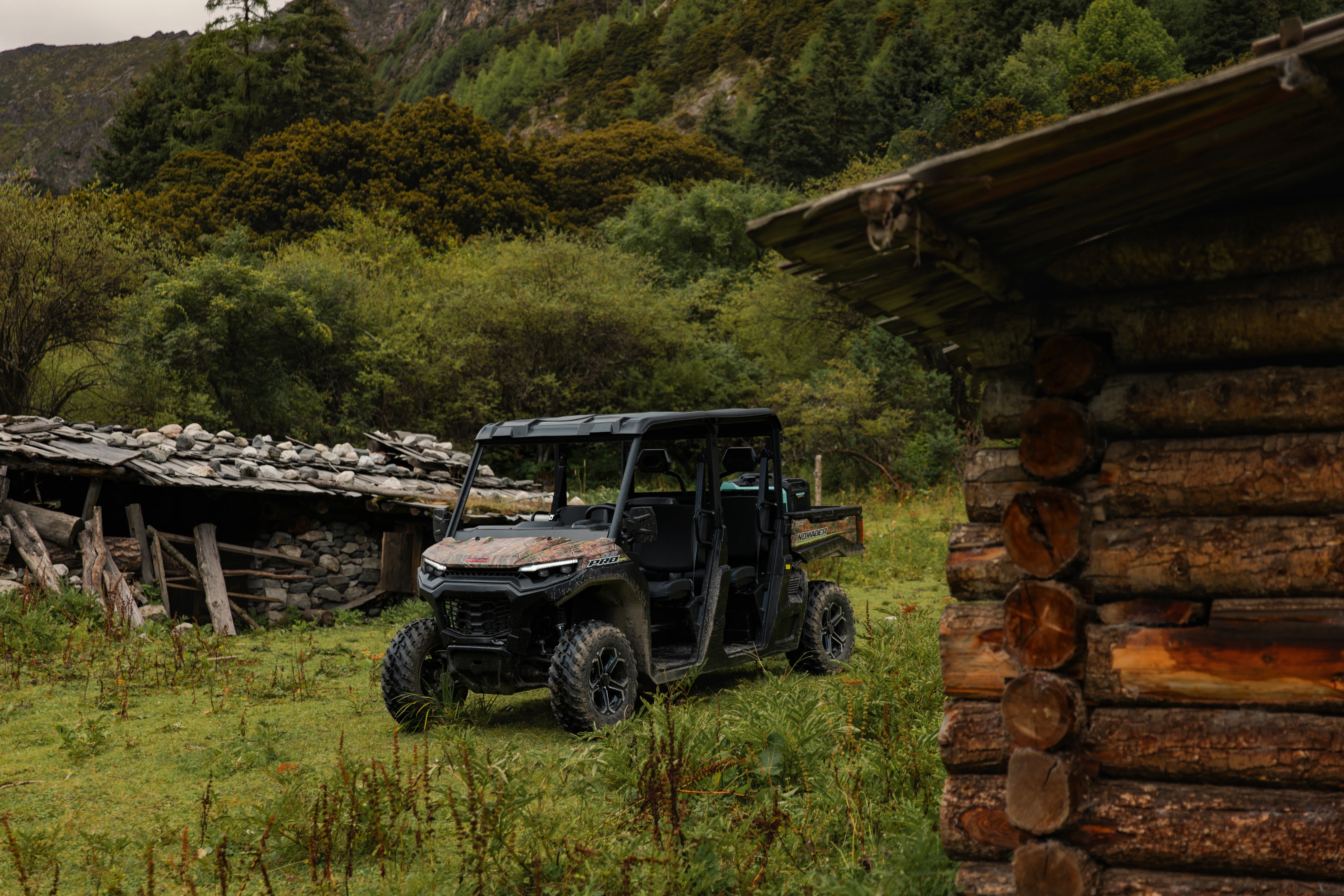
The African continent represents the logical next chapter in SWM’s emerging-market expansion strategy, and early indicators suggest the conditions that made South America successful are replicating across multiple African markets. Kenya’s agricultural sector, which contributes approximately 33% of GDP, is undergoing a mechanization wave that is driving demand for utility vehicles capable of navigating unpaved rural roads during both dry and rainy seasons. Nigeria’s rapidly growing middle class — projected to reach 40 million households by 2030 — is creating a recreational off-road segment that barely existed five years ago. SWM has established initial distributor relationships in Kenya, Nigeria, and South Africa, with the South African operation serving as the regional parts hub for sub-Saharan Africa. The strategy mirrors the Chile mining-sector playbook: identify a high-volume commercial buyer that can anchor the local service infrastructure, then build consumer dealerships around that commercial backbone. In Kenya, a large-scale horticultural exporter has committed to a fleet of forty Nomader units for farm-to-packhouse transport, providing the utilization volume that makes a dedicated service center economically viable. The off road side by side market in Africa is still nascent, but the structural drivers — poor road infrastructure, growing agricultural commercialization, and an expanding consumer class — suggest a growth trajectory that could make the South American surge look modest by comparison.